




Jewelry Pouch vs. Jewelry Box: Which Packaging Fits Your Brand?
When choosing jewelry packaging, many brands start with two common options: jewelry pouches and jewelry boxes.
Both can protect the product, carry a logo, and create a more finished packaging presentation. But they create very different impressions. Jewelry pouches feel soft, lightweight, and flexible, while jewelry boxes feel more structured, classic, and formal.
In this article, we’ll compare jewelry pouches and jewelry boxes in terms of cost, protection, shipping, brand presentation, and product fit, so you can choose the packaging option that fits your brand better.
Jewelry Pouches and Jewelry Boxes: Two Different Packaging Styles
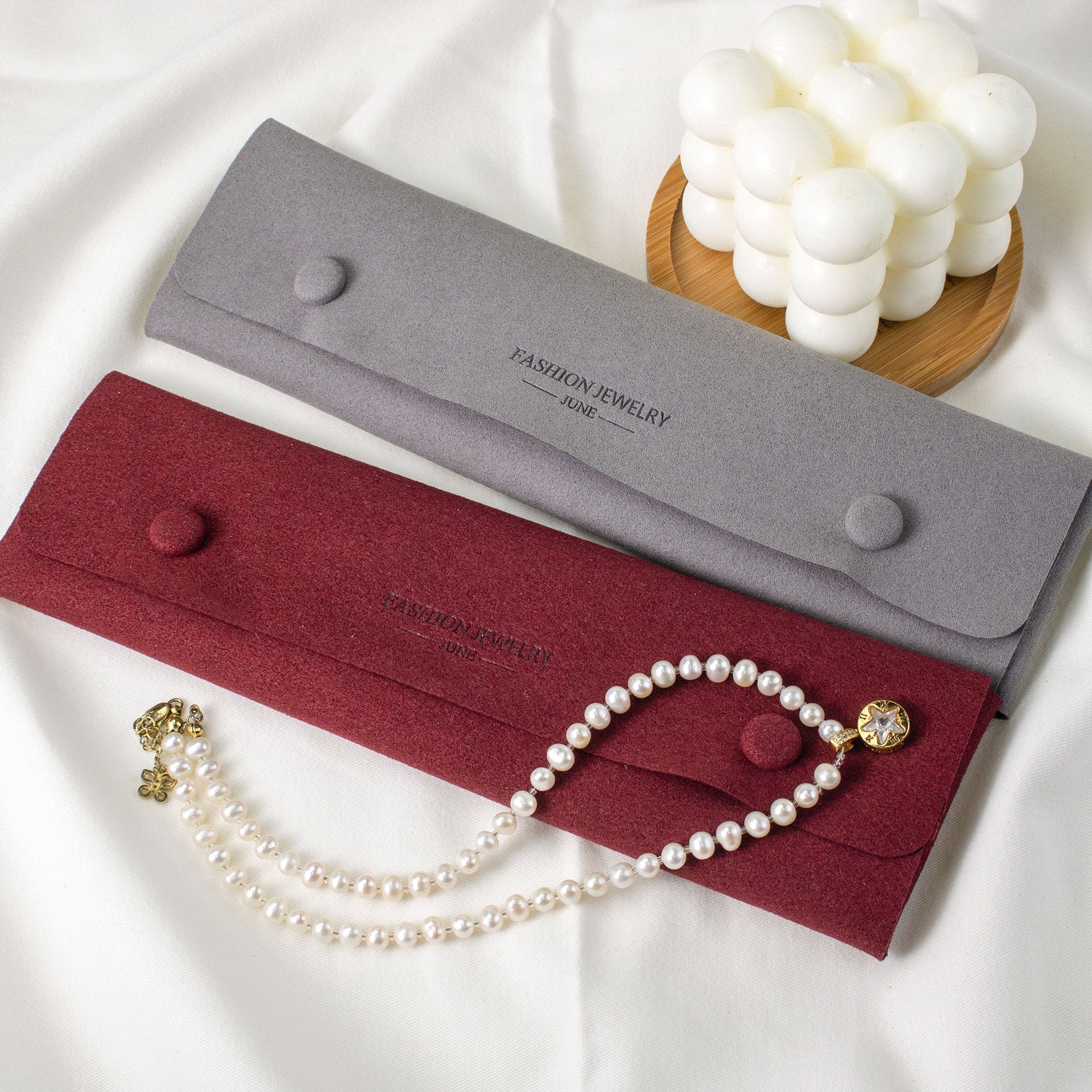
Jewelry pouches are soft packaging options made from materials such as microfiber, velvet, satin, cotton canvas, PU leather, or other fabric-based materials. They come in many shapes and closure styles, including drawstring pouches, button pouches, flap pouches, zipper pouches, and travel-style pouches.
This makes jewelry pouches very flexible. They can feel simple, delicate, modern, handmade, casual, or premium, depending on the material, color, structure, and logo finish.
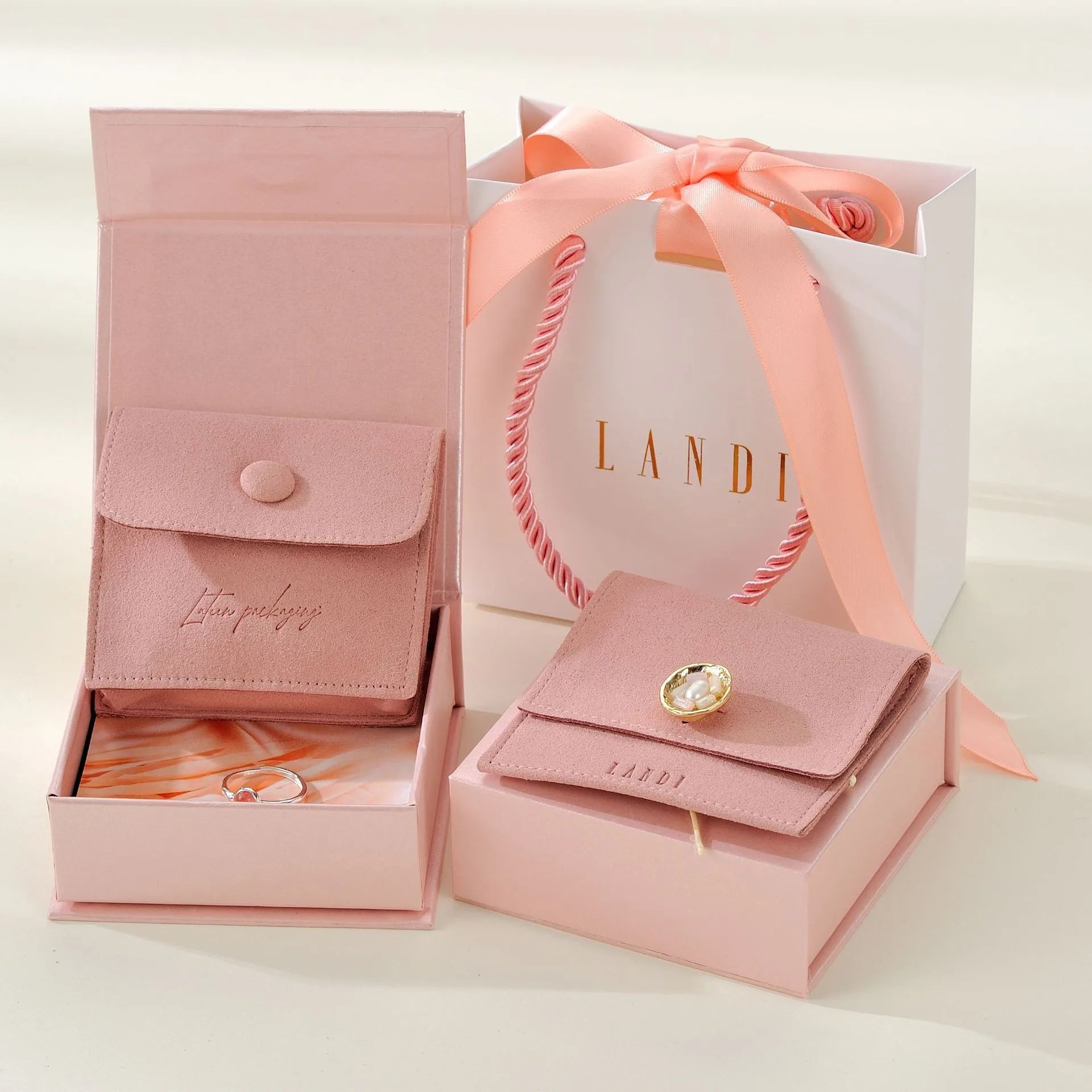
Jewelry boxes, on the other hand, have a more traditional and classic packaging structure. They are usually made with a rigid paperboard or wrapped box structure, often with an insert inside to hold the jewelry in place. Common styles include flip lid boxes, drawer boxes, lid and base boxes, and magnetic closure boxes.
Compared with pouches, jewelry boxes naturally create a stronger sense of order. The shape is more fixed, the structure is more formal, and the overall presentation often feels more complete at first glance.
Cost: Jewelry Pouches Are Usually More Budget-Friendly
From a cost perspective, jewelry pouches are usually the more economical choice.
Because they are soft, lightweight, and compact, pouches are easier to produce, store, and ship in large quantities. This makes them a practical option for brands that need packaging for daily orders, wholesale batches, online store shipments, or product lines with many SKUs.
For brands that need to control packaging cost while still keeping a clean branded look, jewelry pouches are often easier to scale. A simple microfiber pouch or velvet drawstring pouch can still look finished and professional without adding too much cost to each order.
Jewelry boxes usually require a higher budget. The box structure is harder, the material usage is greater, and the inner insert adds another layer of production detail. Boxes also take up more space during storage and shipping, which can increase the overall packaging cost.
This does not mean jewelry boxes are not worth using. It simply means they are often better for products or orders where the packaging needs to carry more weight in the customer experience.
Protection: Jewelry Boxes Offer Stronger Structure
Both jewelry pouches and jewelry boxes can protect jewelry, but they protect products in different ways.
Jewelry pouches are soft and gentle. They help prevent scratches, rubbing, and direct contact between jewelry and other surfaces. For items such as rings, earrings, pendants, bracelets, crystals, charms, and small accessories, a soft pouch can provide enough daily protection while keeping the package lightweight.
The softness of a pouch is also one of its advantages. It will not press too harshly against the jewelry surface, making it a comfortable choice for many delicate items.
Jewelry boxes offer stronger structural protection. Because the box body is rigid, it can better reduce impact from pressure, stacking, or movement during transportation. The insert inside the box also helps keep the jewelry in a fixed position, which is useful for rings, necklaces, earrings, and more premium pieces.
If the product is fragile, high-value, easily tangled, or needs to arrive in a more stable display position, a jewelry box usually provides better protection.
Shipping and Storage: Pouches Are Easier to Handle in Bulk
For shipping and storage, jewelry pouches have a clear advantage.
They are flat, soft, and easy to pack. A large quantity of pouches can be stored in a relatively small space, which is helpful for brands that manage many orders or need packaging ready for daily fulfillment.
Pouches also help reduce shipping volume. For online jewelry sellers, boutiques, handmade brands, and wholesale buyers, this can be important. Smaller packaging means easier storage, simpler packing, and lower pressure on shipping space.
Jewelry boxes take up more room. Even when the box size is small, the rigid structure cannot be compressed like a pouch. This means boxes need more storage space and may increase shipping volume, especially for bulk orders.
For small-batch premium packaging, this may not be a problem. But for brands purchasing packaging in larger quantities, the storage and shipping difference between pouches and boxes should be considered carefully.
Brand Presentation: Soft Branding vs Structured Presentation
Jewelry pouches and jewelry boxes create different brand impressions.
A jewelry pouch gives the brand a softer and more flexible look. Because pouches come in many materials and colors, they can easily match different brand styles. A beige cotton pouch can feel natural and handmade. A black velvet pouch can feel elegant and classic. A pastel microfiber pouch can feel soft, clean, and modern.
Logo customization on jewelry pouches often feels very classic. A simple printed, debossed, or foil logo on the center of the pouch can quietly show the brand identity without making the packaging feel too heavy. For many jewelry brands, this kind of logo placement is clean, recognizable, and easy to use across different product lines.
Jewelry boxes create a more structured and formal brand image. The box itself gives the product a stronger sense of presentation. When customers open a box, the product is usually placed in a fixed position, which makes the unboxing moment feel more intentional.
The logo effect on a jewelry box depends more on the finishing process. A debossed logo can look subtle, refined, and quietly luxurious. A foil logo, especially in gold, silver, rose gold, or other metallic colors, can catch the light and create a brighter, more eye-catching effect.
This is why jewelry boxes are often used when the packaging needs to feel more ceremonial, more premium, or more gift-ready.
Suitable Product Types: Match the Packaging to the Jewelry
Jewelry pouches work well for many product types, especially when the items are small, lightweight, or sold in larger quantities.
They are a practical choice for rings, earrings, bracelets, necklaces, pendants, charms, crystals, handmade jewelry, daily retail orders, online shipments, and wholesale packaging. For brands with many styles or color collections, pouches are also easier to match and rotate.
Jewelry boxes are better when the product needs stronger display value or more structure.
They are often used for engagement rings, fine jewelry, necklace sets, bracelet sets, premium earrings, gift packaging, boutique collections, and products that need to look more complete when opened. A box can help make the jewelry feel more important, especially when the customer is buying it as a gift or for a special occasion.
For some brands, the best solution is not choosing only one.
A pouch can be used for daily packaging, while a box can be used for higher-value products, gift sets, seasonal collections, or premium orders. Some brands also combine both: placing the jewelry in a pouch first, then putting the pouch inside a box for a more layered packaging experience.
Which One Should Your Brand Choose?
If your brand needs packaging that is soft, lightweight, and easy to purchase in bulk, a jewelry pouch is often the more practical choice. It helps keep packaging costs lower, takes up less storage space, and makes shipping easier, while still offering many color and material options.
A jewelry pouch keeps the packaging simple and efficient, but it can still give the product a clear branded finish.
When the packaging needs to feel more structured, protective, and classic, a jewelry box usually works better. Its rigid shape helps protect the jewelry, keeps the product in place, and creates a more formal unboxing experience.
A jewelry box also gives the product more presence, making the packaging feel like part of the product’s value.
In the end, the right choice depends on how your product is sold and what kind of impression you want to create.
For daily jewelry, wholesale orders, handmade pieces, or lightweight shipping, pouches may be the more practical choice. For premium pieces, gift packaging, or a more formal presentation, jewelry boxes may be a better fit.
Final Thoughts
Jewelry pouches and jewelry boxes do not have to compete with each other.
For many jewelry brands, they can play different roles in the same packaging system. Pouches can be used for everyday orders, lightweight products, or larger quantity packaging, while boxes can be reserved for higher-value pieces, gift sets, or collections that need a stronger presentation.
The best choice depends on the role you want the packaging to play. Sometimes the goal is to keep the package simple, soft, and easy to ship. Sometimes the goal is to make the jewelry feel more complete and carefully presented.
When used in the right place, both pouches and boxes can help your brand create a more thoughtful packaging experience.
—Need help choosing between jewelry pouches and jewelry boxes?
Send us your logo or packaging needs, and we’ll help you find a packaging option that fits your brand at support@siliice.com.


